

 Call

 Email

Why Deadweight Anchors Are Ideal Rope Access Solutions

Managing Director
Lucian Ivan
• 5 minute read

Contents
- Why Deadweight Anchors Are Ideal Rope Access Solutions
- What is a Deadweight Anchor?
- What Are the Different Types of Deadweight Anchors?
- Abseiling A-Frame
- Deadweight Trolley
- Why Do Rope Access Technicians Use Deadweight Anchors?
- How Does a Deadweight Anchor Help with Parapet Walls?
- What Process to Take if You Have No Anchor Points?
- What Are the Different Types of Buildings You Might Need to Use a Portable Anchor For?
- How Spectrum Can Support Using Deadweight Anchors for Your Building?
Why Deadweight Anchors Are Ideal Rope Access Solutions
Deadweight anchors in rope access are commonplace nowadays. But what are they? Discover everything about these temporary solutions and what type suits your structural requirements.
For safety, rescue or general cleaning services, rope access is essential to gain aerial passage within otherwise dangerous environments.
But without permanent anchor points, rope access technicians must find ways to complete their services safely and to industry standards.
In this piece, find out how deadweight anchor systems support rope access as a temporary solution and what types of systems suit specific structural requirements.
What is a Deadweight Anchor?
A deadweight anchor is a mobile anchoring system used to suspend rope access technicians safely from height. Deadweight anchor systems are ideal when a fixed anchor is not possible to apply or is necessary to install.
Convenient, quick and simple to set up, deadweight anchor systems rival permanent anchor points with their mobility and flexible functionality.

What Are the Different Types of Deadweight Anchors?
Fulfilling various types of portable rope access and abseiling procedures safely can require different types of deadweight anchors. While they may share the same function, deadweight anchors can have distinctly different designs depending on certain factors, such as the type of roof or abseiling environment.
Crucially, any deadweight anchor rope access system must be certified by appropriate governing bodies, including the Industrial Rope Access Trade Association (IRATA) and BS standards.
There are two commercial types of deadweight anchors available:
Abseiling A-Frame
The Abseiling A-Frame facilitates rope access from flat roofs where the roof floor is loaded. This deadweight anchor is tested in accordance with EN795: 2012 Type E and certified by official engineers in compliance with SPRAT and IRATA ICoP requirements.
Consisting of two front fixed and two rear swivel/locking pneumatic wheels, the Abseiling A-Frame has a tare weight of 390kg and can supply a two-person load. It's ideal for rescue scenarios as per PD CEN/TS 16415: 2013.

Deadweight Trolley
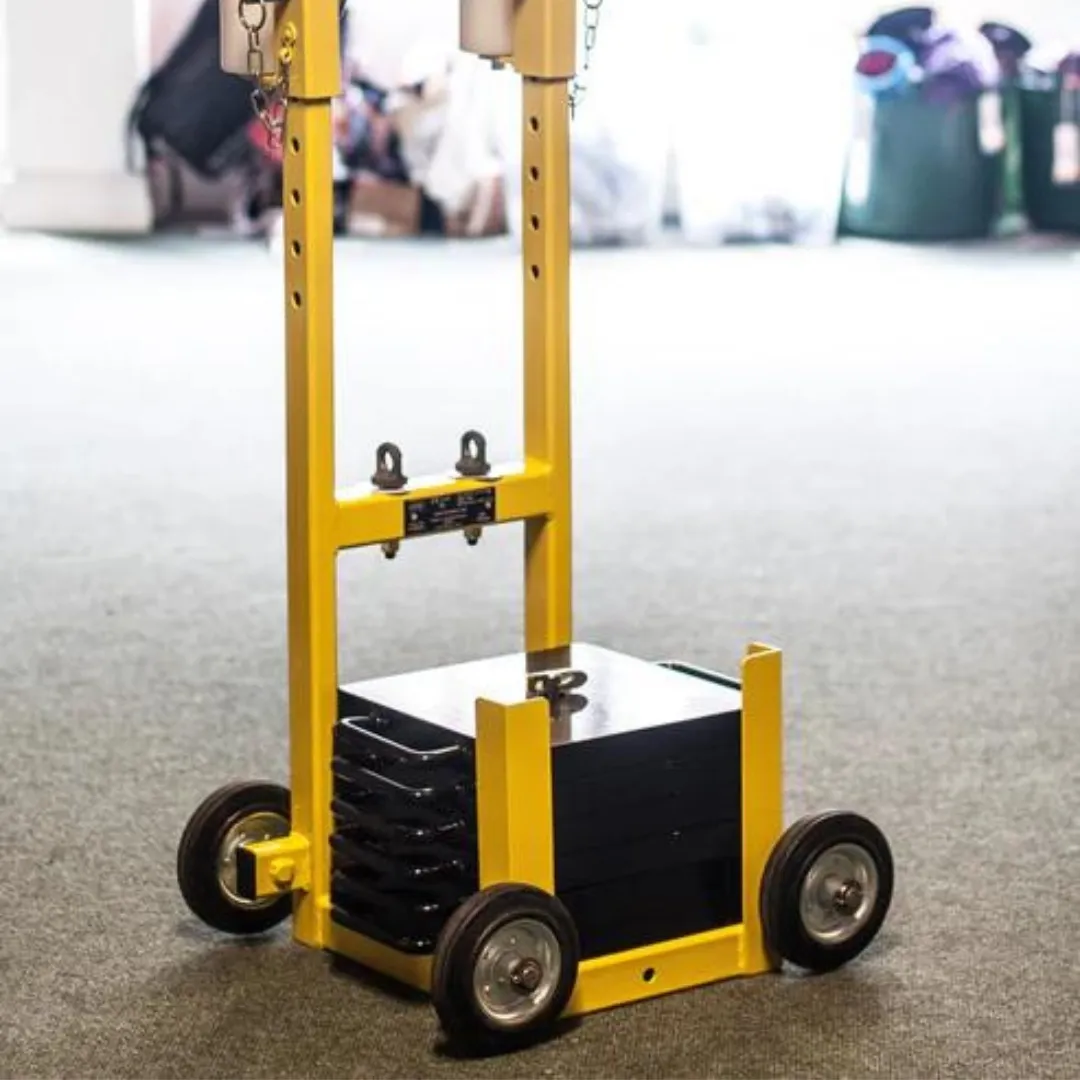
A deadweight trolley (DWT), otherwise known as the portable deadweight trolley, is used behind parapet walls to provide a portable suspension anchor for rope access technicians to abseil from the building.
It’s easy to assemble and transport from location to location, making it an invaluable piece of equipment in challenging situations.
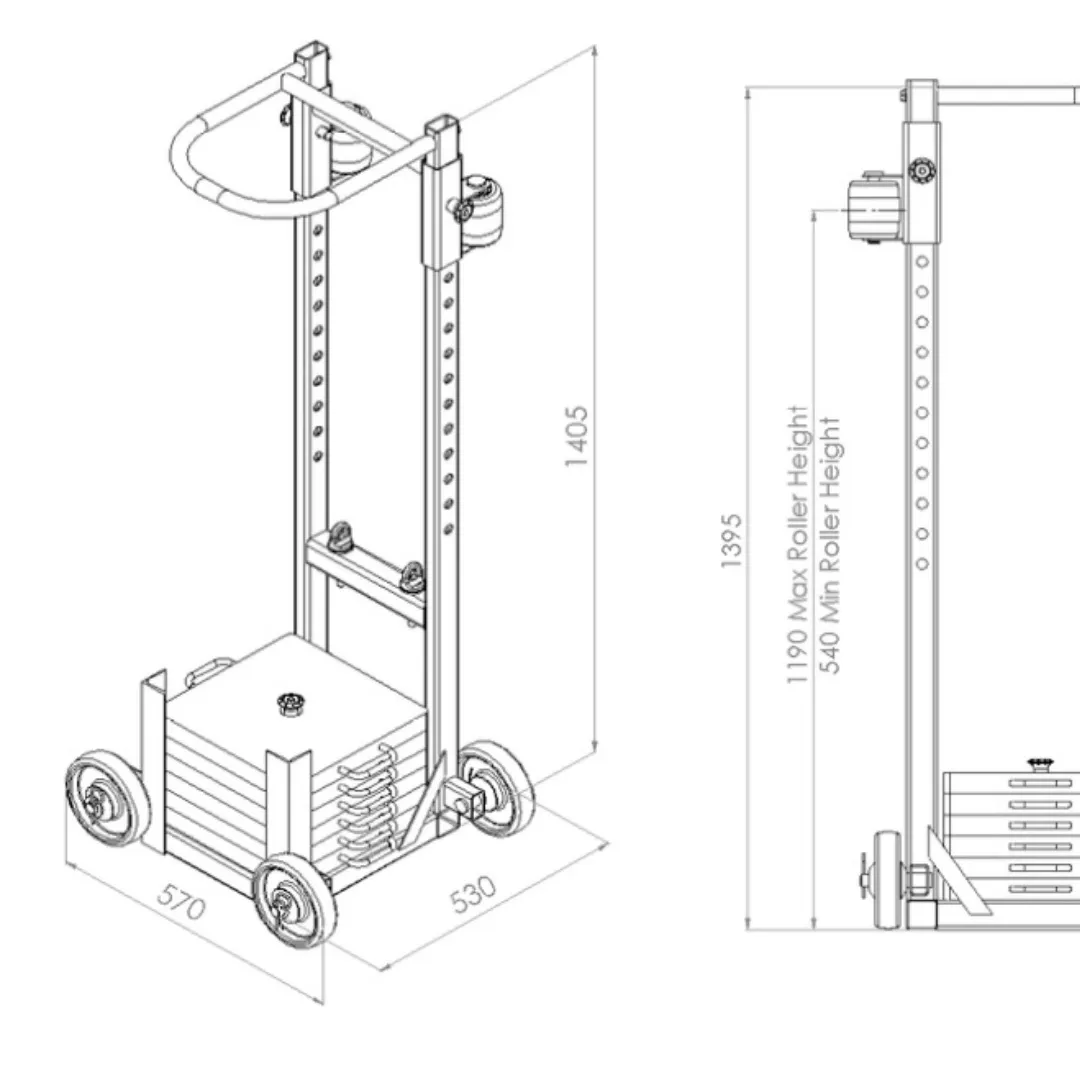
The deadweight trolley is designed to fit in standard lift spaces with a footprint of 400 x 500mm, so it can be taken to the roof and wheeled to the parapet wall with a requirement of 600mm. Adjustable forks can be lifted or dropped into the ideal position on the wall before the trolley is loaded with 25kg weights.
Every deadweight trolley must be CE approved in the UK to comply with:
- BS EN 795:1997 – Protection against falls from height using anchor devices
- BS 7883:2005 – The Code of Practice for the design, selection, installation, use and maintenance of anchor devices
- BS 7985:2002 – The Code of Practice for the use of rope access methods for industrial purposes by rope access technicians
In order to conform to BS EN 795 requirements, eyebolts on the building to support abseiling are thoroughly tested every 12 months.
Each deadweight trolley has a total weight of 178kg and four wheels while conforming with EN 795:2012 standards. This style of deadweight anchor is ideal for confined spaces and is simple and fast to set up for safe rope access procedures and services.
Why Do Rope Access Technicians Use Deadweight Anchors?
Rope access technicians use deadweight anchors in the form of DWTs or Abseiling A-Frames to gain safe aerial access above the building without portable anchor points in place.
From testing services to major building works and high-rise window cleaning, rope access is a valuable skill that applies across multiple industries and professions.
Permanent anchor systems are not always possible or necessary for buildings to install, which is why a deadweight anchor system provides the ideal solution to temporary rope access.
Due to the health and safety verification under BS standards and the IRATA, rope access technicians can work with peace of mind that they are safe and secure as long as they follow the necessary guidelines.

How Does a Deadweight Anchor Help with Parapet Walls?
A DWT is designed specifically for parapet walls, as the trolley is fit against the wall and weighted down for suspension.
Abseiling A-Frame deadweight anchors can also be used on a building with parapet walls, as the main arm of the A-Frame will hang above the wall and still provide an ideal suspension for rope access.
What Process to Take if You Have No Anchor Points?
Not every building has anchor points available, and property owners are often unwilling to invest in permanent anchor points for cost concerns or the risk of spoiling the aesthetic of the building.
So, if you wish to utilise rope access services without applying permanent anchor points to the building, we recommend you hire portable deadweight anchor systems to assist your rope access technicians.
What Are the Different Types of Buildings You Might Need to Use a Portable Anchor For?
Deadweight anchor systems for rope access require a rooftop or stable foundation on which to suspend rope access technicians safely.
The types of buildings suitable for deadweight anchor systems require a stable foundation to fit the portable anchor system. For DWTs, you require parapet walls, while an Abseiling A-Frame only needs a flat roof.
These building types would include:
- High-rise apartment blocks
- Corporate facilities
- Industrial warehouses
- Modern flat roof properties
- Educational buildings
- Storage sites
Spectrum has rope access experience across all types of buildings with or without permanent anchor points.
How Spectrum Can Support Using Deadweight Anchors for Your Building?
At Spectrum, we have years of specialist rope access experience in cleaning, testing and reparation. Our portfolio of portable abseiling services also includes historic roof repair and urgent roof inspection services.
Whether you require simple softwashing services or specialist cleaning on your building, we don’t need permanent anchor points to complete any of our services.
If required, we’ll supply deadweight anchors for rope access projects, including DWTs and Abseiling A-Frames. It all depends on the type of building and the aerial environment.
For more information about how our portable deadweight anchor systems can serve your building needs, get in touch today, and one of our team members will happily supply you with a quote.
Plus, don’t miss our next blog based on rope access inspection, covering multiple services, including safety testing and leak inspection.
Your Building Deserves Thoughtful, Expert Care
Ensure your building remains in top condition with Spectrum Specialist Support. Our expert team offers a full range of exterior maintenance services, from external cleaning and repairs to comprehensive restoration of brick, render, stone and other substrates.
With an IRATA-certified team of abseilers and experience across hundreds of varied projects, we’ll find an access solution that saves you time and money, even on the most complex elevations.
Whether you need emergency maintenance or a tailored service plan, we are here to help. Contact us directly on 020 3551 6206 or email us at info@spectrumss.co.uk to discuss your requirements and receive a free consultation and quote.