

 Call
Call
 Email
Email
Fall Protection Regulations: Key Legislation & Standards

Managing Director
Lucian Ivan
• 14 minute read
Contents
- Your Responsibilities as an Employer or Duty Holder
- UK Legislation for Fall Protection
- British Standards for Fall Protection
- Need Support with Fall Protection Compliance?
Falls from height remain one of the leading causes of workplace injuries and fatalities in the UK. Whether in construction, building maintenance, or industrial settings, working at height carries inherent risks, making compliance with fall protection regulations an essential responsibility for employers, property managers and landlords.
To address these risks, the UK has developed a comprehensive legal framework, including the Work at Height Regulations 2005 and various British and European standards, that set out clear safety requirements. However, navigating these regulations can be complex, as multiple laws, industry standards, and best practices govern collective protection measures, personal fall protection equipment (PFPE), rope access methods, and more.
What This Guide Covers:
This article provides an overview of the most important UK legislation and standards related to fall protection. It breaks down employer responsibilities, outlines the legal requirements, and summarises the British and European standards that apply to work at height.
However, it’s important to note that this guide is not exhaustive – fall protection is a vast subject, and full compliance will require expert advice and site-specific risk assessments.
Important Disclaimer:
The information in this guide is for general educational purposes only and should not be considered legal advice. Employers and duty holders should always consult official HSE guidance, relevant legislation, and professional safety experts when implementing fall protection measures.
Your Responsibilities as an Employer or Duty Holder
Employers, or other duty holders, have a legal obligation to ensure the safety of workers at height. The Work at Height Regulations 2005 (WAHR) place responsibility on those in control of work at height to assess risks, implement appropriate safety measures, and ensure workers are competent.
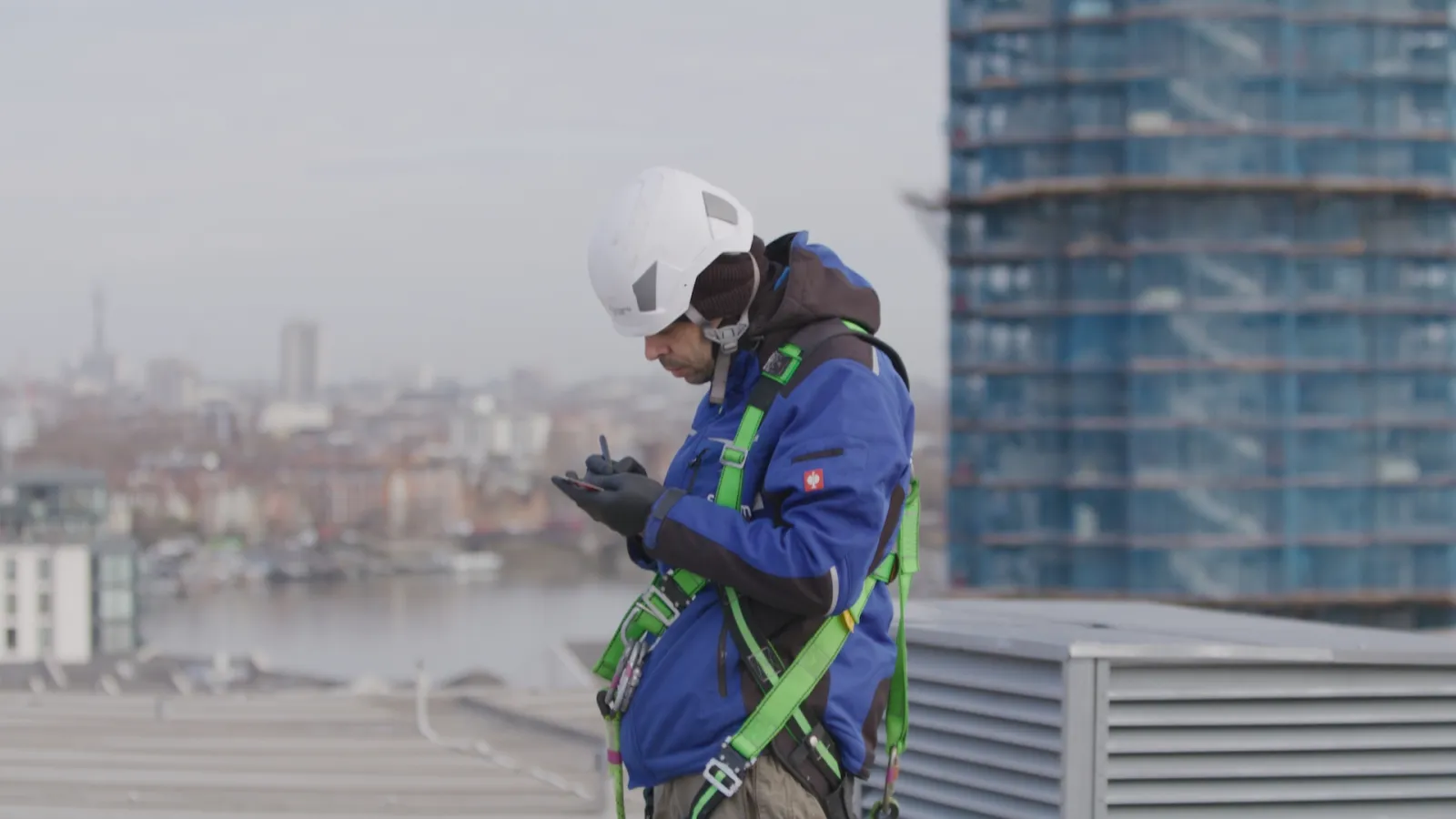
Before we dive deeper into the regulations, this section provides a quick overview of key responsibilities. But, it is important to remember that fall protection requirements vary by workplace and task – a full risk assessment should always be conducted to determine the most appropriate safety measures.
1. Conduct Risk Assessments and Plan Work at Height
Before any work at height takes place, a thorough risk assessment must be carried out. Employers must demonstrate that all work is properly planned, supervised, and carried out safely.
Important steps include:
-
Conduct a risk assessment before any work at height.
-
Identify potential hazards, such as fragile roofs, unprotected edges, and weather conditions.
-
Apply the Hierarchy of Controls:
-
Avoid work at height where possible.
-
Prevent falls using collective protection (e.g. guardrails, barriers).
-
Minimise risks if falls cannot be prevented (e.g. using fall arrest systems).
-
Ensure rescue plans and emergency procedures are in place.
2. Select and Implement the Right Fall Protection Measures
Once risks have been assessed, employers must:
-
Provide suitable equipment that is properly maintained.
-
Choose the safest methods based on the risk assessment.
-
Use collective protection first, such as guardrails, barriers or work platforms.
-
Where collective measures aren’t possible or sufficient, use personal fall protection equipment (PFPE): harnesses, anchor points, lanyards, self-retracting lifelines, etc.
-
Make sure that all equipment meets relevant British and European safety standards.
3. Inspect and Maintain All Equipment Regularly
Fall protection equipment – anchor points, lifelines, lanyards, etc. – must be regularly inspected and maintained to ensure it remains safe for use:
-
Pre-use checks should be conducted before every shift.
-
Routine inspections must follow BS and EN standards for maintenance schedules – generally at least every 6-12 months, depending on your equipment and usage.
-
Any damaged or defective equipment must be removed from service immediately.
4. Meet Training and Competency Requirements
Employers are responsible for ensuring that all workers at height are competent. You must:
-
Verify that workers have received adequate training on equipment use and fall prevention.
-
Make sure that workers understand emergency and rescue procedures.
-
Check that managers and supervisors are trained to enforce safety protocols.
-
Keep training up to date with refresher courses.
By following these key responsibilities, employers and duty holders can protect workers, comply with UK regulations, and reduce the risk of accidents when working at height.
Now that we've covered a high-level overview of responsibilities, let's take a closer look at the specific legislation and standards that govern fall protection in the UK.
UK Legislation for Fall Protection
The UK has a comprehensive legal framework designed to reduce the risks associated with working at height. Several key laws outline employer responsibilities, equipment requirements and best practices to ensure worker safety.
Unlike British and European standards, which provide technical specifications and guidelines for equipment and safety systems, these regulations establish legal requirements that must be followed by employers, site managers and other duty holders.
Below are some of the most important regulations governing fall protection. However, this is not a complete list – employers and duty holders should always refer to official HSE guidance and legal experts to ensure full compliance with all applicable laws.
The Health and Safety at Work etc. Act 1974 (HASAWA)
The foundation of workplace health and safety law in the UK, HASAWA places a general duty on employers to ensure the health, safety, and welfare of employees as far as is reasonably practicable. This includes protecting workers from falls from height by maintaining a safe working environment, providing suitable equipment, and enforcing safety procedures.
Key requirements:
-
Ensure the workplace is safe and free from risks to health, including those associated with working at height.
-
Provide and maintain safe work equipment and systems.
-
Offer adequate training, instruction, and supervision for employees.
-
Carry out risk assessments and implement appropriate control measures.
-
Ensure contractors and third-party workers are also protected under health and safety policies.
The Work at Height Regulations 2005 (WAHR)
The primary UK legislation for fall protection, WAHR applies to all work where there is a risk of falling from any height liable to cause injury. It places a legal duty on employers, building owners, and managers to ensure work at height is properly planned, supervised, and carried out safely.
Key requirements:
-
Avoid working at height where possible – use alternative methods such as extendable tools.
-
Where work at height is necessary, use collective protection (e.g. guardrails) before PFPE (e.g. harnesses).
-
Ensure all workers are competent and trained for work at height.
-
Conduct risk assessments and develop emergency and rescue plans.
-
Inspect and maintain all fall protection equipment regularly.
Lifting Operations and Lifting Equipment Regulations 1998 (LOLER)
LOLER governs lifting operations and lifting equipment, including cranes, hoists, mobile elevating work platforms (MEWPs), and even equipment used to lift personnel. This means it sometimes applies to personal fall protection equipment (PFPE), such as harnesses and lanyards, when used for intentional suspension of workers, as during work positioning or rope access.
Key requirements:
-
Ensure all lifting equipment is strong, stable, and safe for use.
-
Clearly mark safe working loads (SWL) on lifting equipment.
-
Plan all lifting operations properly, with supervision by a competent person.
-
Conduct thorough examinations at regular intervals (every 6 months for suspension of personnel).
-
Keep detailed records of equipment inspections and maintenance.
Provision and Use of Work Equipment Regulations 1998 (PUWER)
PUWER applies to all work equipment and ensures it is suitable, safe, and properly maintained. This includes ladders, scaffolding, harnesses, MEWPs and more – any of the equipment used for work tasks, including working at height. In short, it’s a broader piece of legislation, so the instruments above usually provide more specific and relevant guidance.
Key requirements:
-
Ensure all work equipment is suitable for its intended use.
-
Conduct regular inspections and maintenance to prevent deterioration.
-
Provide training and instructions on the safe use of work equipment.
-
Implement safety measures to prevent falls, such as guardrails and secure anchorage points.
-
Make sure workers using the equipment are competent and supervised.
British Standards for Fall Protection
In addition to legal regulations, there are a wide range of British and European standards that set out the technical specifications and best practices for fall protection equipment, systems, and procedures. These standards help duty holders, contractors, and equipment suppliers ensure that fall protection measures are safe, effective, and compliant.
This isn’t a complete list, but it covers some of the most widely used and important standards in the UK. To make things easier to follow, we’ve grouped them into broad categories:
-
Collective Fall Protection Systems
-
System-Level Standards for Personal Fall Protection
-
Standards for Specific Fall Protection Equipment
-
Rope Access & Specialist Fall Protection
These are practical groupings, designed to help you understand how the standards fit together. They are not formal categories used in legislation or official guidance.
Collective Fall Protection Systems
Collective fall protection includes fixed or temporary systems like guardrails, edge protection, and roof walkways that provide passive protection without needing users to wear PFPE. These measures are the first line of defence in the hierarchy of fall protection.
-
BS 13700 – Permanent Counterweighted Guardrails
Specifies requirements for permanent guardrail systems that rely on counterweights for stability. Systems must be designed using site-specific wind load calculations, inspected annually by a competent person, and supported by a System Technical File with all design and maintenance documentation. -
BS EN 13374 – Temporary Edge Protection Systems
Defines safety and performance criteria for temporary guardrails, toe boards, and mesh panels used during construction or maintenance. Includes minimum height and load requirements, with classifications (A, B, C) based on roof slope and fall risk. -
BS EN 516 – Walkways & Steps
Covers permanently fixed walkways, treads, and steps on pitched roofs. These systems provide safe, passive access for inspection, maintenance, and repair work, and must be capable of supporting expected loads while resisting wear and environmental exposure.
System-Level Standards for Personal Fall Protection
This group of standards focuses on the design, selection, and integration of personal fall protection systems. Rather than looking at individual items like harnesses or lanyards, these documents provide guidance on how components should work together, how anchor systems should be selected and installed, and how fall protection systems should be documented, inspected, and maintained.
If you’re responsible for the planning, specification, or inspection of fall protection systems, these are the standards that underpin safe, compliant practice.
-
BS EN 365 – General Requirements for Use, Maintenance & Marking of PPE
Sets out the essential information manufacturers must provide for all PPE against falls from height. Covers instructions for safe use, maintenance, periodic inspections, repair, marking, and packaging, ensuring users understand the limitations and correct handling of equipment. -
BS EN 363 – Personal Fall Protection Systems
Defines what constitutes a complete fall protection system and how its components – such as harnesses, connectors, and energy absorbers – must function together safely. Emphasises the importance of system compatibility to ensure effective fall protection. -
BS 7883 – Design, Selection & Maintenance of Anchor Systems
A core standard for anchor systems, providing detailed guidance on consultation, layout, design, testing, and maintenance. Introduces the role of a System Designer, and requires a System Technical File to document design intent, calculations, and inspection procedures. -
BS EN 795 – Anchor Devices
Specifies the performance and testing requirements for individual anchor devices used in fall protection systems. Defines multiple types (A-E), including fixed, temporary, flexible, and deadweight anchors, each with specific applications and test criteria. -
PD CEN/TS 16415 – Anchor Devices for Multiple Users
Supplements BS EN 795 by outlining requirements for anchor systems designed to be used by more than one person at a time. Includes additional testing and design considerations for managing shared loads safely. -
BS 8610 – Anchor Systems Specification
Builds on EN 795 and PD CEN/TS 16415 by setting out UK-specific performance and testing criteria for anchor systems installed in base materials across various applications, including fall arrest, rope access, work restraint, and rescue. -
BS 8437 – Selection, Use & Maintenance of Personal Fall Protection Systems
Offers practical, task-focused guidance on choosing and using fall protection equipment in the workplace. Covers risk assessments, compatibility of PPE, rescue planning, and proper maintenance routines. Updated to reflect changes in testing, new PPE technologies, and the transition from the CE to UKCA mark (post-Brexit).
Standards for Specific Fall Protection Equipment
While system-level standards focus on how fall protection equipment works together, this section covers standards for individual components within those systems—such as harnesses, lanyards, connectors, and energy absorbers. Each item of personal fall protection equipment (PFPE) plays a specific role, and these standards define the performance, testing, and safety criteria for each.
Understanding these specifications is key for selecting compliant equipment, ensuring compatibility between components, and meeting the expectations of regular inspections and certification.
-
BS EN 361 – Full Body Harnesses
Specifies requirements for harnesses designed to distribute fall arrest forces safely across the body. Harnesses must include attachment points, pass dynamic tests, and be labelled with usage instructions and performance data. -
BS EN 358 – Belts & Lanyards for Work Positioning or Restraint
Specifies belts and lanyards used to support a user in position or restrict movement to avoid exposure to fall risks. These are not designed for fall arrest and must only be used where no free fall can occur. -
BS EN 354 – Lanyards
Defines requirements for non-energy absorbing lanyards used to connect components of a fall protection system. These must meet strict strength and material specifications but should only be used in systems that include separate energy absorbers for fall arrest. -
BS EN 355 – Energy Absorbers
Sets out performance criteria for components that dissipate fall forces, limiting the arrest force on the user to a safe level. Energy absorbers are often used in conjunction with lanyards or retractable systems. -
BS EN 360 – Retractable Fall Arresters
Covers self-retracting lifelines (SRLs) that extend and retract automatically with the user’s movement, locking immediately in the event of a fall. Includes static and dynamic strength tests, as well as performance in wet and cold conditions. -
BS EN 353-1 & BS EN 353-2 – Guided Type Fall Arresters
These standards define requirements for fall arresters that move along an anchor line and lock in the event of a fall. Part 1 covers rigid lines (e.g. fixed rails), while Part 2 covers flexible lines (e.g. ropes or cables), both vertical and inclined. -
BS EN 341 – Descender Devices
Specifies performance for devices used to lower a person safely as part of an evacuation or rescue system. Covers manual and automatic descenders and includes tests for load capacity, heat resistance, and controlled descent speed. -
BS EN 362 – Connectors
Applies to carabiners, snap hooks, and other connectors used to link elements in a fall protection system. Must be self-closing and self-locking, resistant to corrosion, and capable of withstanding multidirectional loading. -
BS EN 364 – Test Methods for Fall Protection Equipment
Defines standardised procedures for testing components and systems, including dynamic drop tests and static load testing. Used across many other fall protection standards to validate equipment performance.
Rope Access
Rope access is a specialist method of working at height that uses two independently anchored lines – a working line and a safety line – to allow operatives to safely access difficult-to-reach areas.
Unlike standard work positioning, rope access systems always incorporate fall arrest and redundancy, and are subject to their own codes of practice, training schemes, and equipment standards.
These standards and guidance documents define some of the best practices, equipment requirements, and safety systems specific to rope access work.
-
BS ISO 22846-1 – Fundamental Principles for a Rope Access System of Work
Sets out the core principles and system design considerations for rope access operations. Includes requirements for planning, risk assessment, equipment compatibility, and overall system integrity. -
BS ISO 22846-2 – Code of Practice for Rope Access Systems
Builds on Part 1 with detailed procedural guidance on using rope access systems in practice. Covers topics such as rigging methods, rescue strategies, supervision, and site management. -
BS 7985 – Code of Practice for the Use of Rope Access Methods for Industrial Purposes
Provides practical guidance on the safe planning and use of industrial rope access techniques, including equipment selection, anchorage, rigging, rescue planning, and competence requirements. Suitable for those managing or supervising rope access operations. -
BS EN 12841 – Rope Adjustment Devices
Specifies performance and testing requirements for devices used to ascend, descend, or maintain position on ropes in rope access systems. Covers three types of device (A, B, and C), each with distinct roles in fall prevention and movement control. -
IRATA ICOP – International Code of Practice for Industrial Rope Access
Published by the Industrial Rope Access Trade Association (IRATA), this globally recognised code sets out best practices for rope access work, including training standards, equipment use, and safety procedures. Widely used as a benchmark for safe rope access operations in the UK and internationally.
Need Support with Fall Protection Compliance?
Understanding the regulations and standards is only the first step. Whether you're managing a single site or overseeing multiple buildings, implementing effective fall protection systems requires careful planning, the right equipment, and ongoing support.

At Spectrum, we work with building owners, facilities managers, and contractors to deliver fully compliant fall protection solutions – from system design and installation to inspections, training, and ongoing maintenance.
If you need advice, a compliance check, or support with your current systems, our team is here to help.
-
Get in touch today to speak to one of our specialists.
Your Building Deserves Thoughtful, Expert Care
Ensure your building remains in top condition with Spectrum Specialist Support. Our expert team offers a full range of exterior maintenance services, from external cleaning and repairs to comprehensive restoration of brick, render, stone and other substrates.
With an IRATA-certified team of abseilers and experience across hundreds of varied projects, we’ll find an access solution that saves you time and money, even on the most complex elevations.
Whether you need emergency maintenance or a tailored service plan, we are here to help. Contact us directly on 020 3551 6206 or email us at info@spectrumss.co.uk to discuss your requirements and receive a free consultation and quote.