

 Call
Call
 Email
Email
The 6 Best Alternatives to Scaffolding

Managing Director
Lucian Ivan
• 8 minute read
Contents
- Why Look For Scaffolding Alternatives?
- 1. Rope Access (Abseiling)
- 2. MEWPs (Mobile Elevating Work Platforms)
- 3. Pole Systems
- 4. Drone Surveys
- 5. Tower Scaffolds and Podiums
- 6. Hybrid Access Solutions
- How to Choose the Right Alternative
- In Conclusion
- FAQs
Traditional scaffolding has long been the go-to access solution for building maintenance, but it's often not the most efficient or considerate option. It can be costly, disrupt daily life, and even leave a few scars on the building it was meant to help repair. Thanks to innovations in access technology, there are now smarter, safer alternatives that allow property maintenance professionals like Spectrum Specialist Support to offer a variety of access options. In this article, we’ll walk you through six of the best alternatives that reduce disruption, control costs, and get the job done with less drama.
Why Look For Scaffolding Alternatives?
Scaffolding might be a familiar choice, but it’s hardly the most elegant or efficient solution. First, there’s the cost: both in terms of money and time. Erecting and dismantling scaffolding requires significant labour and logistics, and it often comes with a long list of permit requirements that can delay even the most straightforward jobs.
Then there’s the impact on the people and property around it. For tenants, businesses, or the public, scaffolding can be disruptive - obstructing walkways, creating noise, and inviting unwanted attention. It’s not just an inconvenience; it can genuinely hinder daily routines.
And let’s not forget the building itself. Scaffolding poles can leave marks on surfaces that require repair once the job is done. Worse still, the combined weight of the scaffold, workers, and equipment can place considerable stress on older or more delicate walls, leading to cracks or even long-term structural damage.
In short, scaffolding can be more of a burden than a benefit, particularly in sensitive, densely populated, or architecturally unique environments where flexibility and finesse are key.
1. Rope Access (Abseiling)
What It Is
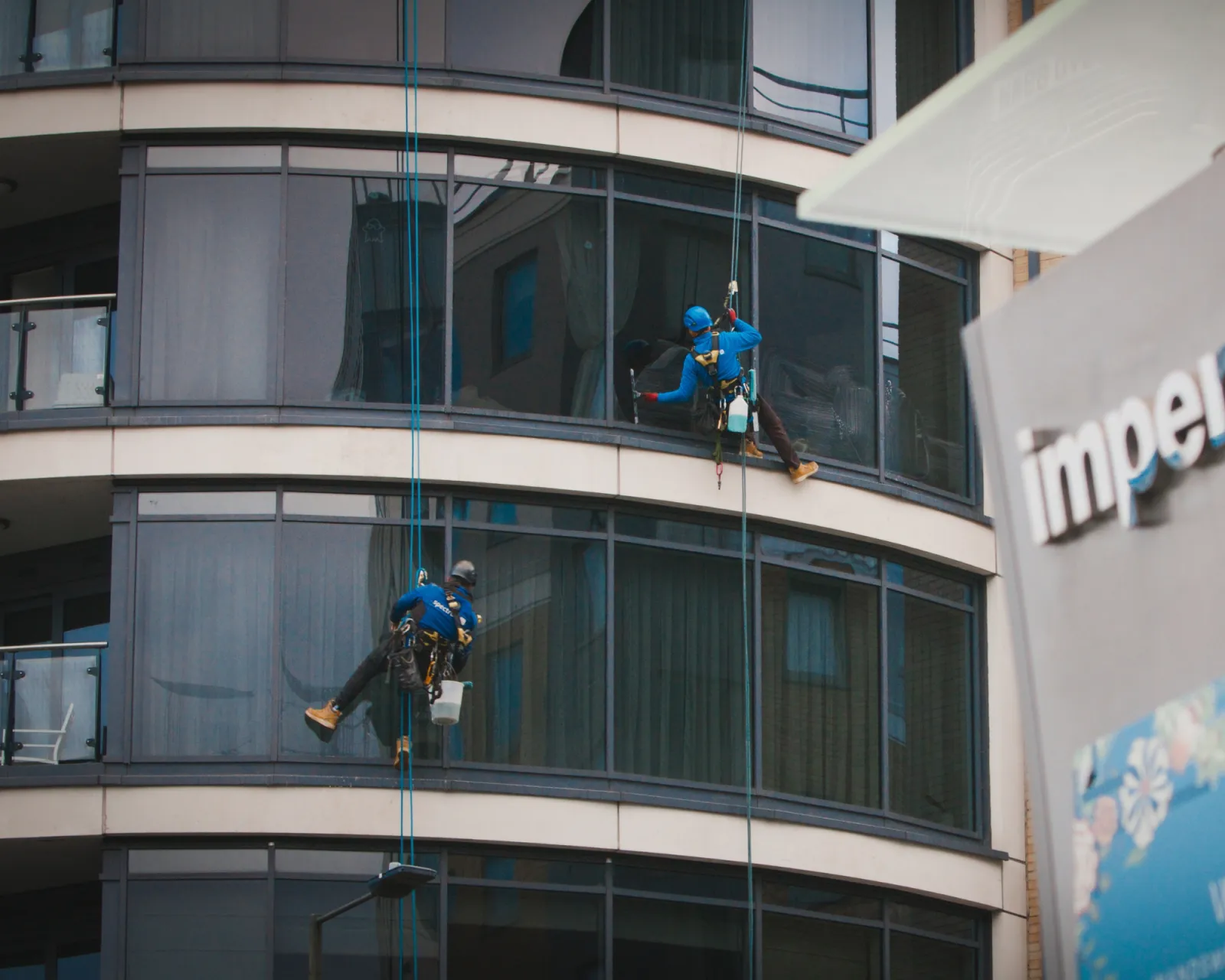
Rope access involves highly trained technicians (usually IRATA-certified) using harnesses and ropes anchored to the property or to temporary anchorage, to safely reach those hard-to-access areas.
Rope access is particularly well-suited to high-rise buildings and areas that are difficult to reach using traditional methods. It’s especially handy when space is tight or when ground-level access is limited - like in narrow courtyards or busy pedestrian zones. This technique is ideal for reactive or emergency situations where speed matters. It's also frequently used for jobs such as window cleaning, painting, and delicate repairs to stone, mortar, or wooden window frames.
Learn more about Spectrum's rope access services
Benefits
-
Fast to set up
-
Cost-effective for many services
-
Minimal disruption
-
No need for heavy machinery
Limitations
-
Best for short- to medium-duration tasks
-
Requires specialist certification (don’t try this at home)

2. MEWPs (Mobile Elevating Work Platforms)
What Are They
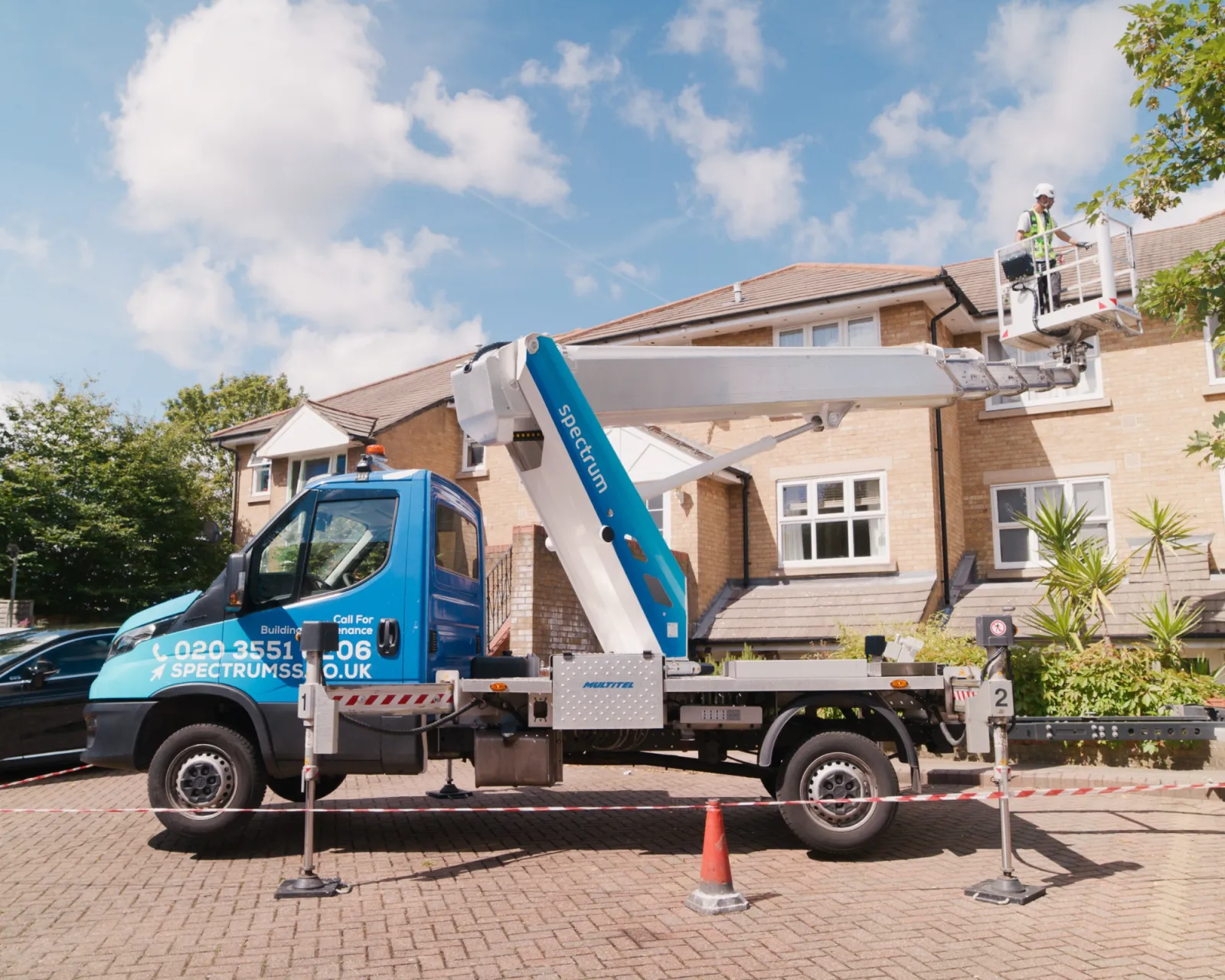
MEWPs are a reliable access choice for services that require more equipment or a stable working platform to complete the work. They’re ideal for façade cleaning, redecoration, signage installation, and repairs involving heavier materials.
With a wide range of MEWPs available, from compact scissor lifts to telescopic and articulating boom lifts, there’s a machine to suit most building types, access needs, and ground conditions. Their flexibility means they can navigate tight spaces, extend over obstacles, and provide a stable working platform for longer tasks. Fast to deploy and easy to reposition, MEWPs offer a practical alternative to scaffolding when speed, reach, and workspace matter.
Benefits
-
Quick to set up
-
Stable and spacious work platforms
-
Great mobility and reach
Limitations
-
Requires space at ground-level access
-
May need street or pavement permits
-
Weather and terrain can be a factor
-
Licensed operators only
3. Pole Systems
What Are They
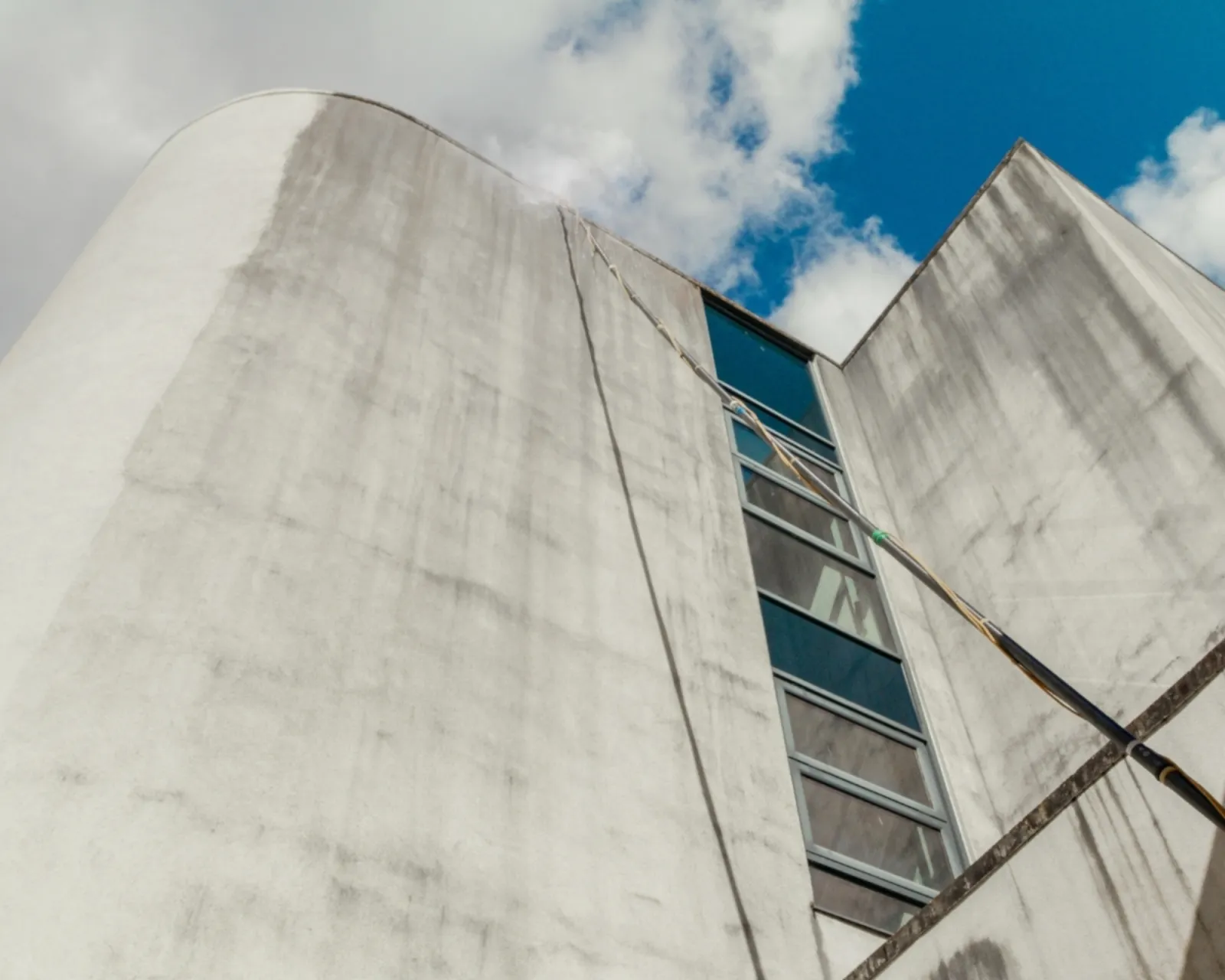
Pole systems offer a fast, low-disruption solution for low impact external maintenance tasks at height, all from the safety of the ground.
These lightweight, extendable poles are particularly effective for window cleaning, façade washing, and surface-level inspections, making them a smart choice for mid-rise buildings or areas where access is restricted.
At Spectrum, our patented carbon-fibre pole system can reach up to 20 metres and are designed to flex around minor obstructions while delivering precision results. Best of all, there’s no need for height permits or heavy equipment, setup is quick, quiet, and discreet. While poles are best suited to lighter tasks, they’re an efficient option when you want minimal visual impact and maximum convenience.
Benefits
-
Safe and efficient
-
No permits needed
-
Non-invasive and quiet, ideal for residential areas
Limitations
-
Limited to surface-level or light-duty work
-
Not always ideal for irregular architecture
-
A little wobbly at extreme heights

4. Drone Surveys
What They’re Used For
Drones are a smart, non-intrusive way to survey roofs, façades, and hard-to-reach elevations, when physical access is limited or unsafe. They capture high-resolution imagery ideal for reports, defect tracking, or pre-project assessments, all without needing to access the property.
A skilled drone operator can navigate tight angles and gather comprehensive visual data in minutes, making this a fast and efficient option for planned or reactive inspections. While drones can’t carry out repairs, they’re a valuable first step in diagnosing issues or monitoring ongoing work.
Benefits
-
Fast and remote operated
-
High-resolution visuals are perfect for reports
-
No physical access required
Limitations
-
Can only visually inspect
-
Weather-dependent
-
Requires CAA certification for most use cases. Anyone flying a drone weighing 250g or more (or with a camera) must pass a test and obtain a Flyer ID from the CAA.

5. Tower Scaffolds and Podiums
What They Are
Scaffold towers and podium platforms provide stable access for low-rise projects without the disruption of a full scaffolding setup. These lightweight, modular structures are ideal for works under 10 metres, like detailed repainting, complex repairs, or tasks requiring secure footing and tools close at hand.
They’re quick to assemble, easy to reposition, and reusable across multiple sites, making them a practical option for short-term or repetitive tasks. While still more visible and space-dependent than rope access or pole systems, they offer a reliable solution when working at modest heights.
Benefits
-
Ideal for low-rise works under 10 metres
-
Reusable and easy to transport
-
Stable work platform for precise tasks
-
Ideal for Specialist repairs or redecoration
-
No full scaffolding rig required
Limitations
-
Still needs space and some setup time
-
May block pathways or entries
-
Not great for complex or high elevations
6. Hybrid Access Solutions
What It Is
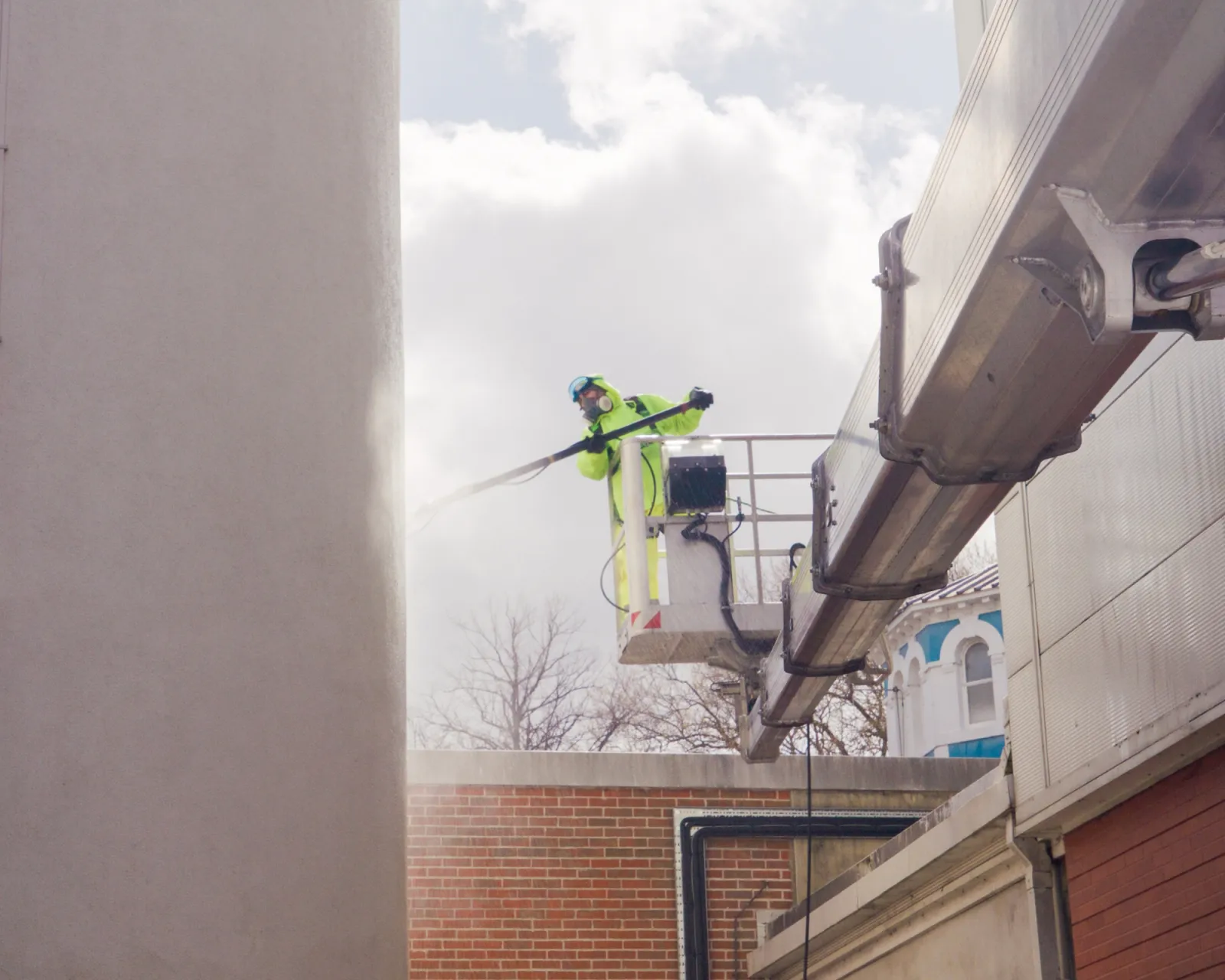
Hybrid access is where flexibility meets precision and it’s at the core of how we approach major works at Spectrum. By combining rope access, MEWPs, pole systems, and even more traditional tools where needed, we build a custom strategy for every elevation, every task, and every constraint on site.
This approach is ideal for complex, multi-level properties or buildings with varying access requirements, from riverside balconies to rooftop parapets. It allows us to work smarter, not just harder, minimising disruption and keeping costs down without ever compromising on safety or quality.
If the job is large or awkward, chances are we’ve solved something similar with a hybrid plan and saved our client time, budget, and hassle in the process. You can check out our case studies and filter by access type here.
Benefits
-
Totally adaptable to your building’s quirks
-
Cost-effective without compromising quality
-
Minimises disruption and allows for scheduling flexibility
Limitations
-
Very few - these solutions are designed to work around any constraints
For example, a multi-block riverside property in Hammersmith, needed timber repairs, window replacements, and extensive facade restoration. Traditional scaffolding would have been slow, costly, and highly disruptive. Spectrum opted for a hybrid approach using abseiling, step ladders, and cherry pickers. This allowed access to hard-to-reach areas while keeping the project on budget and residents undisturbed. Work was even adjusted daily to account for weather, where ground-level tasks took priority on windy days.
How to Choose the Right Alternative
Here’s a quick breakdown to help guide your decision:
-
Project Type
-
Building Height
-
Access Restrictions
-
Speed & Disruption Priorities
-
Budget
If you're unsure which approach fits your building best, feel free to get in touch with the Spectrum team. We're always happy to help you explore the right fit for your project.
In Conclusion
From rope access to MEWPs, pole systems to drone surveys, we've covered a range of smarter alternatives to traditional scaffolding, each with its own advantages depending on the building, task, and constraints. While every method has its strengths, the key takeaway is simple: access isn’t a one-size-fits-all solution.
That’s why, at Spectrum, we’re champions of hybrid access. By combining multiple methods and tailoring them to your property, we’re able to deliver safer, faster, and more cost-effective results. Whether it's a small repair or a major works programme, we work closely with our clients to design bespoke strategies that minimise disruption and maximise value.
If you’re planning a project, we’d love to show you how creative, well-planned access can make all the difference. Speak with our team today to explore the best approach for your building.
FAQs
Is rope access safe?
Yes. Rope access is extremely safe when performed by certified technicians under strict safety protocols. For more information on our rope access capabilities, check out or blogs on rope access here.
Can I use these methods without tenant disruption?
Definitely. Rope access, pole systems, and drones are especially low-impact, most residents won’t even notice we’re there.
What’s the most affordable access method?
It depends on the task, but rope access and pole systems are generally more cost-effective for shorter or targeted works than full scaffolding. You can estimate scaffolding costs and compare alternatives using our calculator here.
Do I need planning permission for non-scaffold access?
Usually not. MEWPs may require a council permit if they operate on public land, but we’ll handle the paperwork so you don’t have to.
Your Building Deserves Thoughtful, Expert Care
Ensure your building remains in top condition with Spectrum Specialist Support. Our expert team offers a full range of exterior maintenance services, from external cleaning and repairs to comprehensive restoration of brick, render, stone and other substrates.
With an IRATA-certified team of abseilers and experience across hundreds of varied projects, we’ll find an access solution that saves you time and money, even on the most complex elevations.
Whether you need emergency maintenance or a tailored service plan, we are here to help. Contact us directly on 020 3551 6206 or email us at info@spectrumss.co.uk to discuss your requirements and receive a free consultation and quote.